Why Does Panchakki Aurangabad Still Work After 350 Years?
Panchakki Aurangabad: Inside the Water Mill That Fed Thousands Without a Single Motor
The town of Aurangabad has many monuments meant to express power. Panchakki is special in its own right. No one constructed the place to awe a guest of honor or commemorate a victory in battle. Rather, someone must have constructed it to tackle the challenge of grinding flour for many people daily using only water.
This is the key question surrounding this place, which someone built in the 17th century. Its name simply means “water mill,” and that becomes clear once you understand how the mechanism operates. In fact, the mechanism still works today, even though someone constructed it more than three hundred years ago.
The following guide will help you understand why Panchakki was built, how the water-powered grinding mill works, what we observed during our visit, and which nearby attractions make perfect additions to your itinerary. If you enjoy travel blogs like this, visit MaharashtraViews.com again!
Bibi Ka Maqbara: A Legendary Story of Love and Legacy
Quick Facts Before You Plan the Visit
| Detail | Information |
| Location | Chhatrapati Sambhajinagar (Aurangabad), Maharashtra |
| Built By | Followers of Baba Shah Musafir |
| Period | Late 17th century |
| Entry Fee | Small ticket fee, subject to revision |
| Time Needed | 45 minutes to 1 hour |
| Best Time to Visit | Early morning or late afternoon |
| Nearest Landmark | Bibi Ka Maqbara, roughly 10–15 minutes away |
As timings and entry fees may vary by season, it is advisable to verify them on the official tourism website before leaving your hotel.
Maharashtra Tourism Official Website
The Man Behind Panchakki
A local Sufi saint, Baba Shah Musafir, inspired the construction of Panchakki. Baba Shah did not desire money or prestige. He became well known for offering food to everyone who came to him, without asking about their background or religious affiliation.
The frequent communal meals, or bhandaras, created a demand that manual grain grinding could no longer meet. Therefore, people devised a system to grind grains on a much larger scale.
A practical need led people to create Panchakki sometime in the late 1600s, during an era when Mughal influence in the Deccan region was quite strong. Malik Ambar’s contributions to water engineering in the region may also have influenced its creation.
Archaeological Survey of India
How Water Actually Reaches Panchakki
This water system makes Panchakki famous among engineering students. Water from a spring in the hills travels through underground channels for about six kilometres before driving the mill. It does not come from a nearby stream or local well.
An Underground Channel, No Pumps Involved
Builders channelled this water through a network of earthen clay pipes rather than a simple sloped gravity channel. At regular intervals, they built elevated masonry towers along the route — these acted as siphon points, keeping the water pressurised and pushing it forward over distance. Because sources vary on the exact length, the water source is generally placed somewhere between 6 and 11 kilometres away, depending on which account you read. Once the water reached Panchakki, it rose up into an elevated tank before falling into the main reservoir, creating the force needed to turn the mill.
From Reservoir to Grinding Stone
When the water arrives, it rises into the hauz — an elevated stone tank — before falling with force into the main reservoir below. This drop creates the pressure needed to spin a large iron wheel fitted with blades, almost like a turbine. The wheel connects through a shaft to separate grinding stones positioned above, and as the wheel turns, it rotates the stones continuously.
This design lets the mill run for hours without anyone turning the stones by hand. As a result, Panchakki could supply flour for hundreds of people every day, something a hand-operated mill simply couldn’t manage.
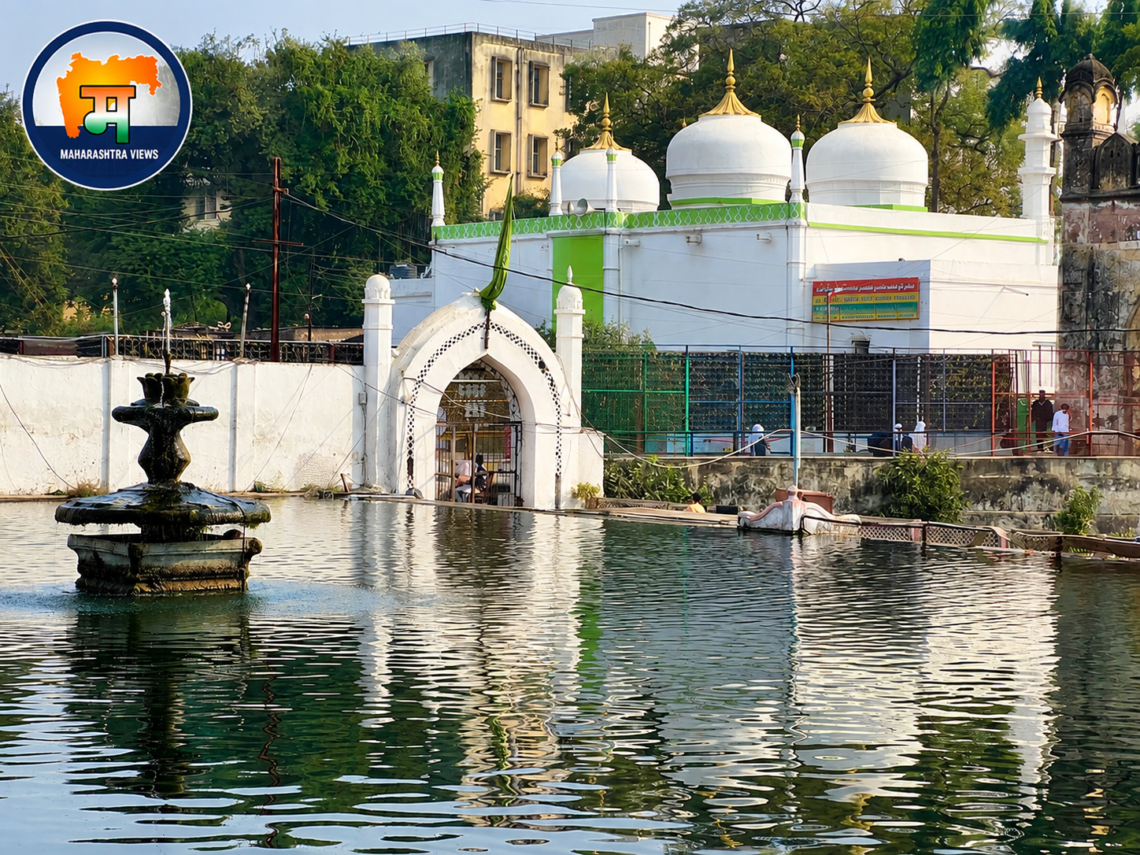
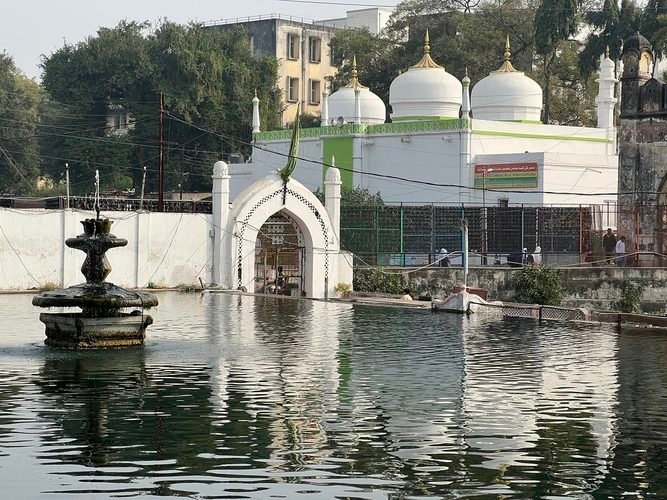
The reservoir today holds fish, and it’s usually the first thing visitors notice before they even look toward the mechanism.
What You’ll Actually See at the Complex
Panchakki isn’t a single building. It’s a cluster of structures built around the same water system, each serving a different purpose.
| Structure | What It Was Used For |
| Mahmood Darwaza | Original entrance gate, currently closed for safety |
| Central mosque | Still active; local worshippers use it regularly |
| Musafirkhana | A rest house built for travelling pilgrims |
| Underground chamber | Designed to stay cool during summer months |
| Small museum | Displays old utensils and glass artefacts |
| Dargahs | Tombs of Baba Shah Musafir and his family members |
A courtyard connects most of these sections, and from certain angles, you can spot the minaret of Bibi Ka Maqbara in the distance. It’s a small detail, but one that ties two of Aurangabad’s landmarks together visually.
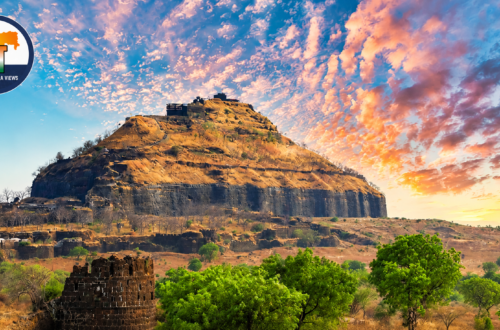
Devgiri Fort: The 8 Wonder of The World
Maharashtra Views Travel Experience: What We Noticed on the Ground
It was not enough for us to stroll around Panchakki and read all the signboards. We wanted to understand the experience the place creates for travellers because this is precisely the kind of knowledge missing from generic guides.
The first thing that catches your eye is the reservoir, primarily because of the fish. People stop there to take pictures and then proceed to the turbine. When you look closely at the turbine and the grinding stones, you can clearly see that the machinery is still working.
A caretaker at the facility also noted that most visitors tend to spend about fifteen minutes there and fail to understand what the place is all about. It is important to learn how the water travels underground for about six kilometres.
Things a first-time traveller should know before entering:
- The type of shoes is important because some stone footpaths become slippery when they are close to the reservoir
- The early morning offers the most beautiful lighting for photographing the water and fishes
- Weekdays are quiet as compared to weekends and holidays
- You must have some cash with you as sometimes it becomes difficult to pay by card in smaller locations
- A guide who is near the entrance will be able to tell you more about the water system than a signboard
Nearby Attractions: What Actually Fits Into Your Day
Since you’re already at Panchakki, it makes sense to plan the rest of your day around it rather than treat it as a quick, standalone stop. Here’s how the nearby attractions actually fit into that plan.
| Attraction | Distance from Panchakki | Time Needed | Why Visit |
| Bibi Ka Maqbara | Roughly 10–15 minutes | 1–1.5 hours | Marble mausoleum often compared to the Taj Mahal |
| Aurangabad Caves | Around 20–25 minutes | 1.5–2 hours | Buddhist rock-cut caves with detailed carvings |
| Daulatabad Fort | Roughly 45 minutes | 2–3 hours | Hilltop fort known for its defensive engineering |
| Ellora Caves | About 1 hour | Half a day | UNESCO World Heritage Site, best planned separately |
Nearby Attractions Worth Adding to Your Day:
- 🕌 Bibi Ka Maqbara — About 10–15 minutes away, needs 1–1.5 hours. A marble mausoleum often compared to the Taj Mahal.
- 🏛️ Aurangabad Caves — Around 20–25 minutes away, needs 1.5–2 hours. Buddhist rock-cut caves with detailed carvings.
- 🏰 Daulatabad Fort — Roughly 45 minutes away, needs 2–3 hours. A hilltop fort known for its defensive engineering.
- ⛰️ Ellora Caves — About 1 hour away, needs half a day. A UNESCO World Heritage Site, best planned as a separate trip.
For tourists who have only one day at their disposal, combining a visit to Panchakki with Bibi Ka Maqbara is a good idea, as they are both located near each other, and no long walk is required for the tour. Daulatabad Fort and Ellora Caves require a half-day each.
Final Thoughts
Panchakki is not built on the principle of size or splendor. What makes Panchakki unique is that it attracts people due to its purpose. It is a gravity-driven mill that catered to hundreds of visitors on a daily basis and has lasted for 350 years.
This is something very uncommon at a place of heritage. At most places of heritage, one has to use imagination about what must have taken place there. Not here, where everything is visible.


You May Also Like
Grishneshwar Temple: The Ultimate Famous Place
Badrinath Dham: The Complete Guide You Actually Need