Grishneshwar Temple: The Ultimate Famous Place
When people talk about Maharashtra’s famous attractions, the Ellora Caves often receive all the attention. However, just a few steps away stands a temple that is equally sacred but surprisingly less explored—the Grishneshwar Temple.
Before the red-stone temple, I instantly felt a wave of peace wash over me. Despite reading about the temple multiple times, visiting the temple in person was an entirely different experience. Each sculpture, each pillar, and each prayer reflected the devotion of the hundreds of people who visited this sacred place.
Recognized as the twelfth and final Jyotirlinga of Lord Shiva, the Grishneshwar Temple is one of the holiest pilgrimage sites in India. Whether you are a devotee, a history enthusiast, or a traveler exploring Maharashtra, this temple offers an unforgettable spiritual experience. If you want to read more such fascinating historical blogs, visit MaharashtraViews.com. Now, let’s begin our blog and explore the rich history of this remarkable place!

History of Grishneshwar Temple
The history of the Grishneshwar Temple is as inspiring as its spiritual importance. Although the temple has undergone several reconstructions, its roots go back many centuries.
Historical evidence indicates that builders constructed the temple before the 13th century. However, invading armies later damaged it during their attacks. The love of his followers for Lord Shiva remained intact.
The temple was later rebuilt with the help of Maloji Bhosale, who was the grandfather of the famous King Chhatrapati Shivaji Maharaj. The temple was reconstructed in the current form by the legendary queen of the Maratha kingdom, Ahilyabai Holkar of Indore during the 18th century.
The Legend Behind Grishneshwar Temple
Every Jyotirlinga has a unique story, and the legend of Grishneshwar Temple is one of the most touching.
Long ago, a woman named Ghushma was a devoted follower of Lord Shiva. Every day, she made 101 Shiva Lingas from clay, worshipped them with complete devotion, and immersed them in a nearby lake after her prayers.
Although Ghushma lived a peaceful life, tragedy struck when her jealous sister Sudeha killed Ghushma’s only son and threw his body into the same lake.
The next morning, Ghushma continued her prayers without losing faith in Lord Shiva. Instead of seeking revenge, she surrendered herself completely to God.
Touched by her unrelenting loyalty, Lord Shiva appeared before her. He restored her son to life and offered to punish Sudeha. However, Ghushma requested forgiveness instead of revenge.
Impressed by her compassion and devotion, Lord Shiva manifested as a Jyotirlinga at that very place. Since the temple was established because of Ghushma’s devotion, it became known as Ghushmeshwar, which later evolved into Grishneshwar.
Even today, this inspiring story teaches us that true faith grows through patience, forgiveness, and complete trust in God.
Architecture of Grishneshwar Temple
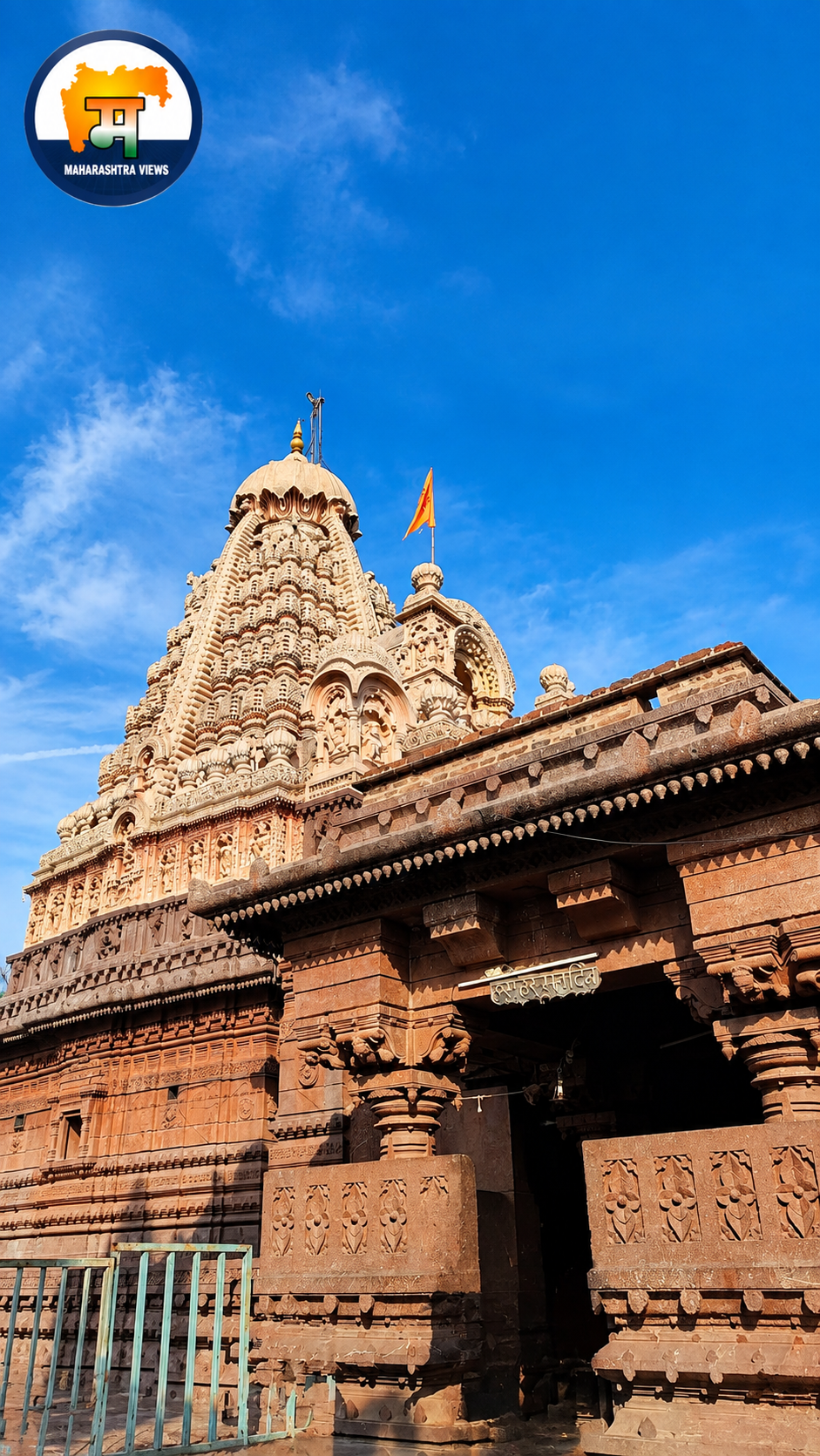
As I entered the temple courtyard, the first thing that caught my attention was its beautiful red basalt stone architecture. Although the temple is not as massive as some famous temples in India, its intricate carvings make it truly special.
The present temple follows the Hemadpanthi style of architecture, which is known for its strong stone construction and detailed craftsmanship. Every pillar, wall, and ceiling displays remarkable carvings that have survived for centuries.
The temple has five levels and has a beautiful Shikhara (spire), which is made up of some carvings, which are visible even from far distances. The outside of the temple has sculpted images of Lord Shiva, Lord Vishnu, Goddess Parvati, Lord Ganesha, Dasavataras, and various other gods in Hinduism. In addition, various carvings from old Hindu literature can be seen on the walls of the temple.
In the Sabha Mandap, the roof is held up by beautiful stone pillars. The carvings on these pillars showcase the talent of the craftspeople. In the middle of the hall, there is a well-carved Nandi – the bull that serves as the vehicle of Lord Shiva.
Unlike many crowded pilgrimage sites, the temple maintains a peaceful atmosphere that allows visitors to admire its architecture without feeling rushed.
My Darshan Experience
Walking towards the Garbhagriha, I could hear devotees chanting “Om Namah Shivaya” and “Har Har Mahadev.” The spiritual energy inside the temple was powerful yet calming.
To stand in front of the Jyotirlinga was the most unforgettable experience that I had during my trip. Unlike the numerous popular temples where one is only able to see the idol of the god from a distance, there have been instances when Grishneshwar allows its visitors to get closer to the deity.
Although the temple receives large crowds during Shravan and Mahashivratri, the peaceful atmosphere remains unchanged. The sound of bells, the fragrance of incense, and the continuous chanting create an unforgettable spiritual experience.
Temple Timings and Visitor Information
| Information | Details |
| Temple Timings | 5:30 AM To 9:30 PM |
| Morning Aarti | Early morning |
| Entry Fee | Free |
| Time Required | 1–2 Hours |
| Best Time to Visit | October to March |
During Mahashivratri and the holy month of Shravan, thousands of devotees visit the temple. Therefore, arriving early in the morning helps you avoid long queues.
Important Things to Know Before Visiting
To make your visit smooth and respectful, remember these points:
- Men must remove their shirts before entering the Garbhagriha.
- Dress modestly while visiting the temple.
- Photography and videography are not allowed inside the sanctum.
- Remove your footwear before entering the temple premises.
- Carry a water bottle, especially during summer.
- Maintain silence and respect the religious atmosphere.
Following these simple guidelines will help preserve the sanctity of this sacred place.
Nearby Attractions
One of the biggest advantages of visiting Grishneshwar Temple is its location. Several famous attractions are just a short drive away.
Ellora Caves (Less than 1 km)
A UNESCO World Heritage Site featuring 34 magnificent rock-cut caves and the world-famous Kailasa Temple.
Daulatabad Fort (About 15 km)
One of India’s strongest medieval forts, known for its brilliant military architecture and fascinating history.
Bibi Ka Maqbara (About 30 km)
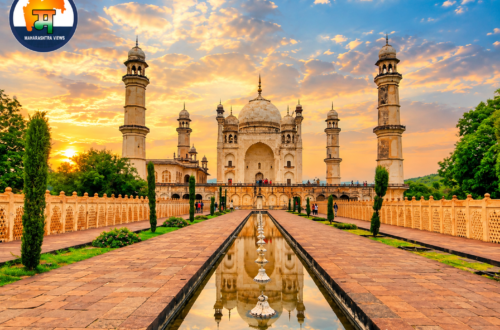
Often called the “Mini Taj Mahal,” this elegant monument was built by Prince Azam Shah in memory of his mother.
Together, these destinations make Verul and Chhatrapati Sambhajinagar one of Maharashtra’s best heritage circuits.
My Final Verdict
Visiting the Grishneshwar Temple was much more than a sightseeing trip. It was a deeply spiritual experience that reminded me of the power of faith, patience, and devotion. While the magnificent Ellora Caves showcase India’s architectural brilliance, the Grishneshwar Temple reflects its spiritual heart. Together, they offer one of the most rewarding travel experiences in Maharashtra. If you are planning a trip to Chhatrapati Sambhajinagar, I strongly recommend visiting both places on the same day. Whether you come for darshan, history, or photography, the Grishneshwar Temple will leave you with memories that stay long after your journey ends.
Jai Maharashtra


You May Also Like
Chhatrapati Sambhajinagar: Explore Its Hidden History
Bibi Ka Maqbara: A Legendary Story of Love & Legacy