
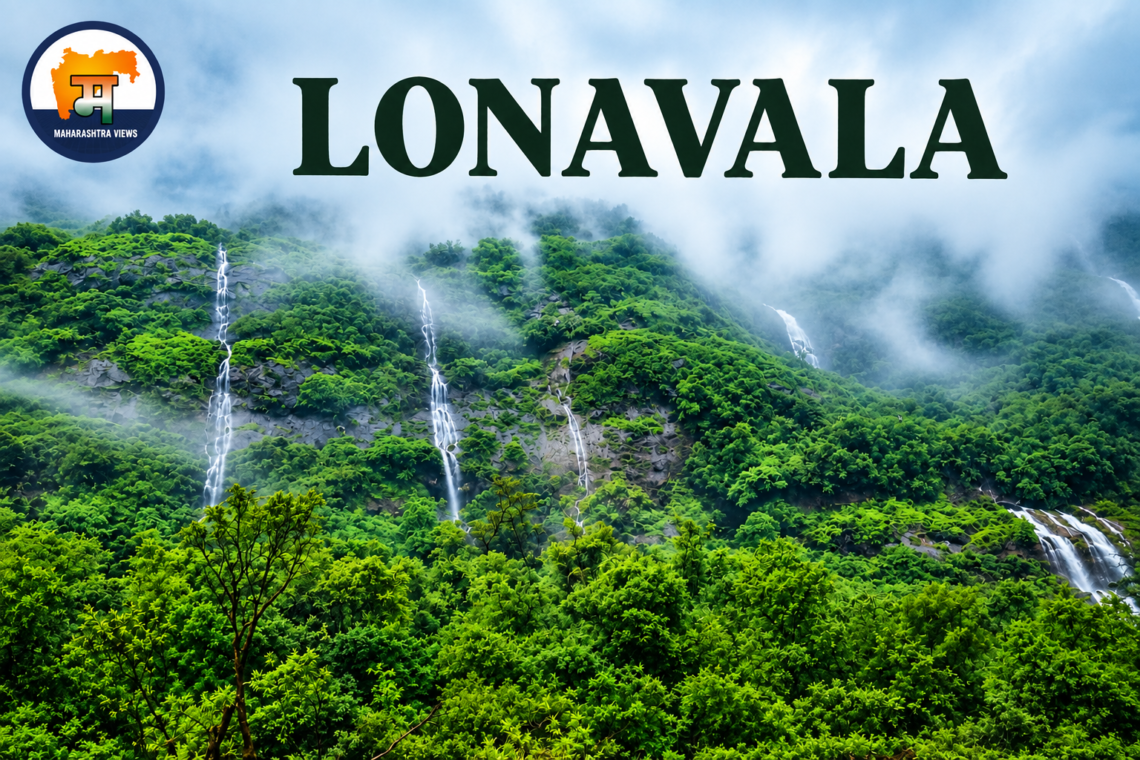
Lonavala: Hidden Gems Beyond the Hills

🌿 Lonavala: Where the Sahyadris Tell a Story
Imagine leaving the busy streets of Pune or Mumbai. Within a few hours, the view starts changing. The buildings become fewer. The roads start climbing. Green hills appear on both sides. Then clouds begin to cover the mountains.
This is Lonavala.
Located in the Sahyadri ranges of Maharashtra, Lonavala is one of the most loved hill stations of the state, well connected to both the major cities of Pune and Mumbai, making it a popular weekend destination for people from Pune and Mumbai. It is not just the hills here you will come to visit.
Lonavala has a story. Ancient Buddhist caves are hidden in its hills. Old forts stand above the valleys. Historic routes once crossed these mountains. during the monsoon, waterfall appear across the landscape. so, a trip to lonavala can be much more than a quick picnic. You can explore nature. You can walk through history. And you can still enjoy a peaceful break from city life. If you want to read more such fascinating historical blogs, visit MaharashtraViews.com. Now, let’s begin our blog and explore the rich history of this remarkable place!
🕰️ The History of Lonavala: Much Older the Hill Station
Today, lonavala is known as a vaction of spot. But its history started long before hotels, roads and tourist, crowds. The hills around Lonavala are believed to have been part of ancient routes that connected the Konkan region with the Deccan. The routes through these mountains were used for travel and trade. And this is where the ancient caves become important.
🪨 The Buddhist Connection
The Karla and Bhaja Caves prove that people have lived in this area for more than two thousand years. The work in Karla Caves started around the 2nd century BCE and soon became a major Buddhist site. The main highlight of the caves is the huge rock-cut Chaitya, or prayer hall. These caves also played an important role in the early spread of Buddhism.
The complex has around 22 caves, including prayer and living spaces. The location of these caves was not random. They were close to old routes through the Western Ghats. Monks could live near these routes. Travellers could stop nearby. Trade could move through the mountain passes. This tells us something important.
Lonavala’s connection with people and travel goes back long before it became a tourist town.
🏰 From Caves to Forts
Centuries later, the same mountains gained military importance. The hills gave rulers a natural advantage. From the top of a fort, soldiers could watch valleys and mountain routes. This led to the development and use of forts such as Lohagad, Visapur and Rajmachi. The Marathas later used several forts in this region as part of their defence network.
Over time, Lohagad became an important part of the Maratha struggle for control of the Deccan under Chhatrapati Shivaji Maharaj.
The Birth of Modern Lonavala
The story changed again during British rule. The cool climate of the Sahyadris made Lonavala attractive as a hill retreat. Its position between Bombay and Pune was another advantage. The railway later made the journey easier. Gradually, Lonavala grew into the place we know today.
🗓️ Lonavala Through Time
| Period | Importance |
| 2nd century BCE | Buddhist cave activity begins |
| Ancient Period | Mountain routes connect Deccan and konkan |
| Medieval Period | Forts gain strategic importance |
| Maratha Period | Forts become part of regional defence |
| British Period | Lonavala develops as a hill station |
| Modern Period | Popular weekend destination |
🔎 A fact many tourists miss:
Lonavala has more to its past than just forts. Its ancient caves show that the region has a history dating back more than 2,000 years.

🌧️When Monsson Turns Lonavala green
If Lonavala is famous for one thing during the monsoon, it is this. The hills change completely. Dry slopes become green. Small waterfalls appear. Clouds move between the mountains. The air becomes cool and fresh. From June to September, Lonavala receives its famous monsoon look. This is also when many waterfalls and streams become active.
🌦️ Lonavala in Different Seasons
| Season | What you get | Best for |
| 🌧️ June–September | Green hills, mist and waterfalls | Monsoon lovers |
| 🍃 October–February | Cool weather and clearer views | Sightseeing |
| ☀️ March–May | Warm weather | Short visits |
If your main goal is greenery and waterfalls, monsoon is the obvious choice. If you want easier fort visits, winter is more comfortable.
💡 Small Tip:
Monsoon is beautiful, but wet rocks can be dangerous. Stay away from strong water flow and slippery edges.

🏞️ The Places That Make Lonavala Famous
Lonavala has much to discover. But each spot offers a different experience.
🌊 Bhushi Dam
Bhushi Dam is a very famous monsoon spot. Water flows across the steps and rocks during heavy rain. This makes the place attractive to visitors. But it can also become very crowded. Visit early if you want a quieter experience. And during heavy rain, do not enter strong water currents.
🐅 Tiger’s Point
Water flows across the steps and rocks during heavy rain. Tiger’s Point is one of the best viewpoints near Lonavala, offering a wide view of the valley and surrounding hills. When the sky is clear, you can enjoy vast views across the Sahyadri landscape. Monsoon mist has a mood of its own.
🌊 Pawna Lake
Pawna Lake is for travellers who prefer open spaces and peaceful views. The lake sits among hills. The landscape becomes especially beautiful during monsoon. It is also popular for camping and outdoor stays.
🌳 Ryewood Park
Ryewood Park offers a simple break from the busy tourist areas. Large trees cover the park. It is a good place for a relaxed walk.
⭐ Quick Pick
| You want | Visit |
| 🌧️ Water and monsoon | Bhushi Dam |
| 📸 Valley views | Tiger’s Point |
| 🌊 Peaceful landscape | Pawna Lake |
| 🌳 Quiet time | Ryewood Park |


🛡️ Lohagad: The Fort With more Than One Story
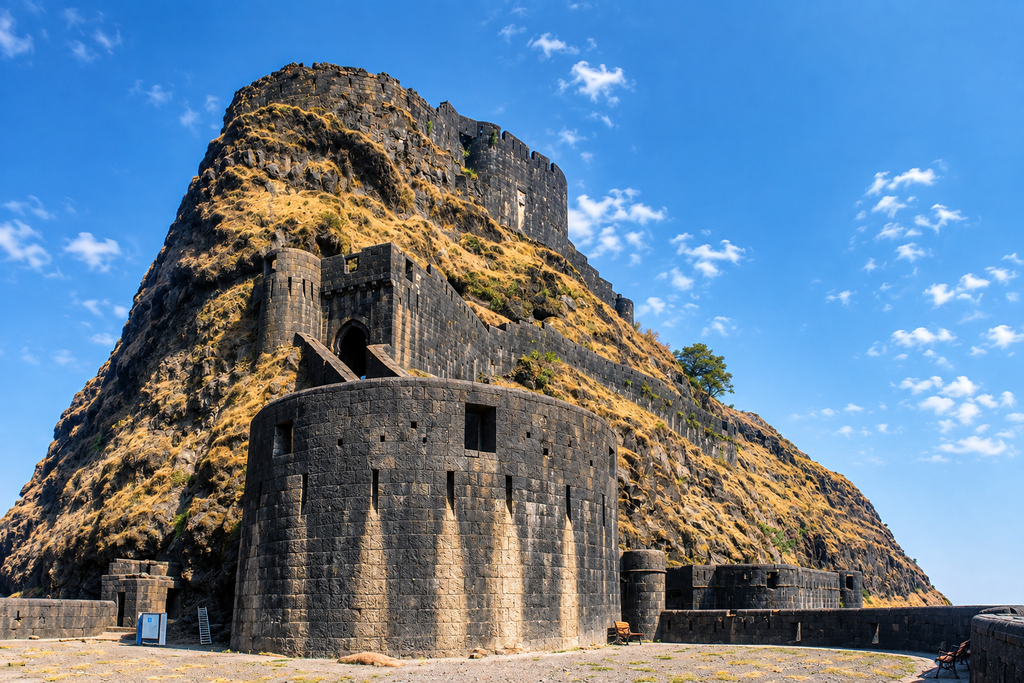
If there is one fort you must know about near Lonavala, it is Lohagad Fort. The name itself means Iron Fort.
The fort stands on a hill and has strong walls, old gates and a long ridge. Its most famous feature is Vinchukata. This narrow ridge looks like the tail of a scorpion. That is where its popular name comes from.
🏰 Lohagad and the Marathas
During the Maratha period, Lohagad served as an important military centre. Shivaji Maharaj captured the fort in 1648. Later, Lohagad changed hands several times during the conflict between the Marathas and the Mughals. The Marathas regained control of the fort in 1670. But there is an even older detail.
🔎 The Rare Lohagad Inscription
A Jain Brahmi inscription was found at Lohagad. It is believed to date back to around the 2nd or 1st century BCE. This is a fascinating clue. It suggests that the hill had a historical connection long before the Maratha period. This is one of those small details that can completely change how you look at a fort. You are not simply walking on a Maratha fort. You are walking through a landscape with a much older past.
🏔️ Visapur and Rajmachi
Visapur stands close to Lohagad. It has a larger fort area and wide views of the Sahyadri hills. Rajmachi is another important fort area. But there is a detail many people miss. Rajmachi consists of two fort peaks, known as Shrivardhan and Manaranjan.
🏰 Fort Comparison
| Fort | Special feature | Best for |
| Lohagad | Vinchukata | Beginners + history |
| Visapur | Large fort ruins | Trek lovers |
| Rajmachi | Two fortified peaks | Nature + history |
🪨 Karla and Bhaja: Lonavala Goes Back 2,000 Years
The forts take you into medieval history. The caves take you much further back.
🕉️ Karla Caves
Karla Caves are among the most important ancient attractions around Lonavala. The site is famous for its large Chaitya hall. Huge hall has rows of stone pillars. The design shows the skill of ancient rock-cut builders. The caves were linked with Buddhist monks and the old routes crossing the Western Ghats.
🪨 Bhaja Caves
Bhaja has around 22 caves. The complex contains a Chaitya and several monastic spaces. One interesting feature is the use of stone forms that copy wooden construction. This is easy to miss. Most visitors look at the large cave. Few stop to study the smaller architectural details.
Take Note
bserve pillars, carvings and shapes within these caves. They reveal details about the early construction that a quick photograph cannot show.
🆚 Karla and Bhaja
| At a Glance | Karla Caves | Bhaja Caves |
|---|---|---|
| Famous for | Grand Chaitya | Ancient cave group |
| Historical importance | Buddhist site | Buddhist site |
| Main feature | Impressive prayer hall | Around 22 rock-cut caves |
| Best experience | Architecture | History and scenery |


🌿 The Lesser-Known of Hill Station
Most people focus on the well-known places in Lonavala. But the region has quieter places and small details worth exploring.
🪨 Bedse Caves
Bedse Caves are another ancient Buddhist site in the wider Lonavala region. They are less famous than Karla. That also means the experience can feel quieter. For travellers who enjoy history, Bedse is worth considering.
🏰 Look Beyond the Main Fort
However, Lonavala’s forts are not only about reaching the top. Look at the walls. Look at the gates. Watch closely at the natural slopes. These features show how the mountains themselves became part of the defence.
🌄 The Real Hidden Gem
The biggest hidden feature of Lonavala is actually its landscape. The same hills have seen: Ancient monks → Traders → Fort soldiers → Maratha armies → British travellers → Modern tourists Ultimately, That is what makes this region special. You are not looking at separate attractions. You are looking at different chapters of the same landscape.
🚗 Plan your Lonavala trip in an easy way
A significant advantage is Lonavala’s location. This is roughly 65 km from Pune and 84 km from Mumbai. However, travel time may vary depending on traffic and weather conditions.
The town is connected by road and railway. Moreover, Pune airports is one of the most accessible major airports in case you are traveling from out of city. So the basic routes are simple:
Pune → Lonavala
🚗 Road | 🚆 Train
Mumbai → Lonavala
🚗 Road | 🚆 Train
This is why you do not need a long holiday.
You can manage it even with a single day. Taking two days will give you more time to explore the forts and caves.
🍫 A Small Food Stop
Before leaving, try Lonavala chikki. This is the most well known traditional local sweet on offer around the town. Hot tea and Maharashtrian snacks are also an option here during monsoons.
🛍️ What should I take home
- hikki
- Fudge
- Local snacks
- Small souvenirs

🗺️ One Day or Two Days: How to Enjoy Lonavala Better
The best Lonavala trip is not the one where you visit the most places. It is the one where you enjoy the places you choose.
📅 One-Day Plan
Morning
Reach early.
Have breakfast.
Visit Tiger’s Point.
Afternoon
Explore Bhushi Dam or Pawna Lake.
Have lunch.
Visit Ryewood Park for a relaxed walk.
Evening
Return towards Lonavala.
Buy chikki.
Start your return journey.
📅 Two-Day Plan
Day 1
Lonavala → Tiger’s Point → Bhushi Dam → Pawna Lake
Day 2
Choose one route:
🏰 History: Karla + Bhaja
🥾 Fort: Lohagad + Visapur
🌿 Adventure: Rajmachi

❤️ Why Lonavala Deserves Your Next Weekend
Lonavala is easy to reach. But that is not its biggest attraction. Its real strength is the variety. One side gives you green hills. Another gives you ancient caves. A little farther, you find historic forts. During monsoon, waterfalls appear. In winter, the air becomes cooler and the views become clearer. And between all these places, you get the simple pleasure of travelling through the Sahyadris. That is the story of Lonavala. So, if you are planning a short trip from Pune or Mumbai, do not think of Lonavala as only a picnic spot. Go for the hills. Stay for the history. Explore the caves. Walk through the forts. Watch the clouds move across the valleys. And give yourself enough time to enjoy the journey.
Lonavala is not just a place to see. It is a place to experience.


One Comment
Pingback: