
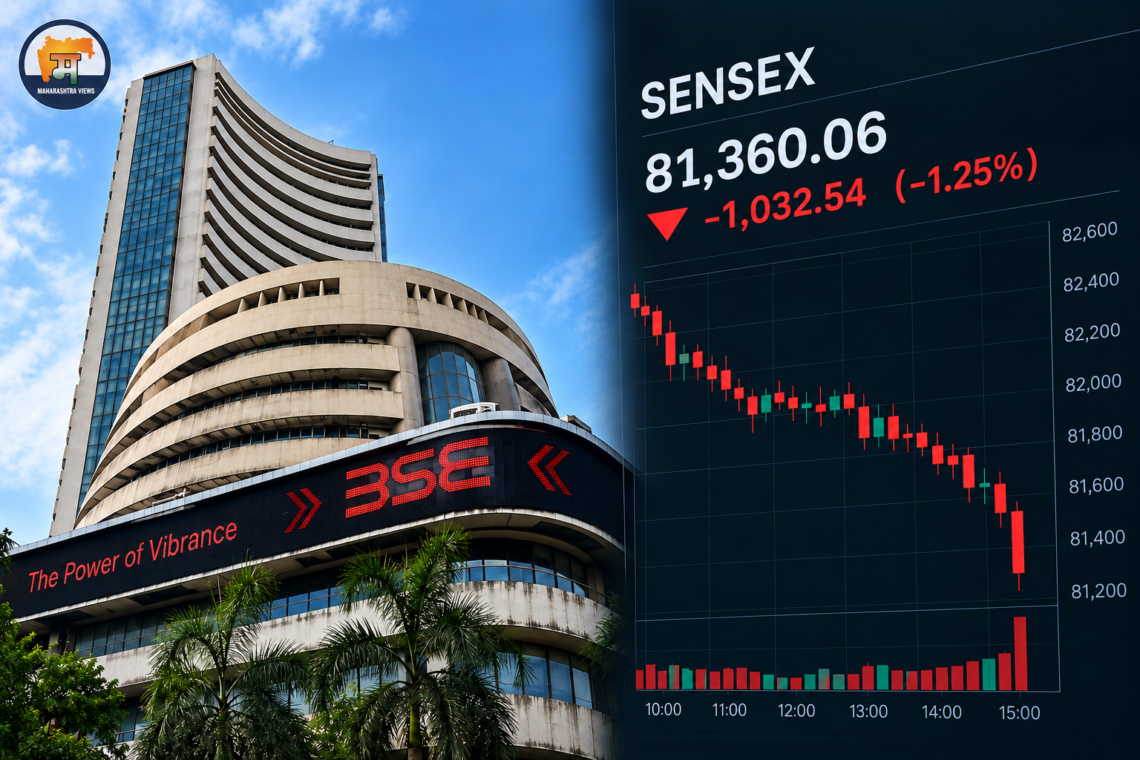
Sensex Crash: 5 Shocking Reasons It Fell So Fast
Sensex Crash: Why the Market Is Falling and What It Means for You
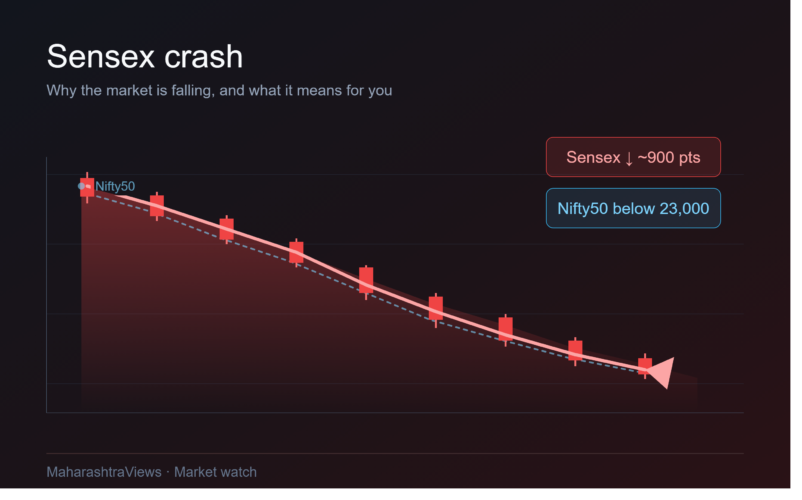
Open your trading app on a bad day and the Sensex looks scary. This recent Sensex crash dropped the index by about 900 points, and the Nifty50 also slipped below 23,000.
So what went wrong? There is no single reason behind this Sensex crash. A few global problems hit the market at the same time, and each one made the other worse. Below, I break them down in plain words. If you like finance blogs like this, visit Maharashtraviews.com for more.
What Is the Sensex and Why Does It Matter?
The word Sensex is short for “Sensitive Index.” It tracks the movement of the Bombay Stock Exchange (BSE). So, when the Sensex moves, it gives a good sense of the market mood, and sharp moves like a Sensex crash often signal that mood turning negative fast.
In total, the index holds 30 large, well-established companies. Moreover, the BSE picks them using two things. First, it looks at market capitalisation. Second, it checks the company’s track record. Meanwhile, the BSE calculates the index every second during market hours, using the free-float method.
The Sensex also does three useful jobs:
- It measures the movement of the market.
- It works as a benchmark for fund performance.
- It supports index-based derivative products.
For a look at the official index details, see “BSE India Sensex page”
Which Companies Move the Index Most?
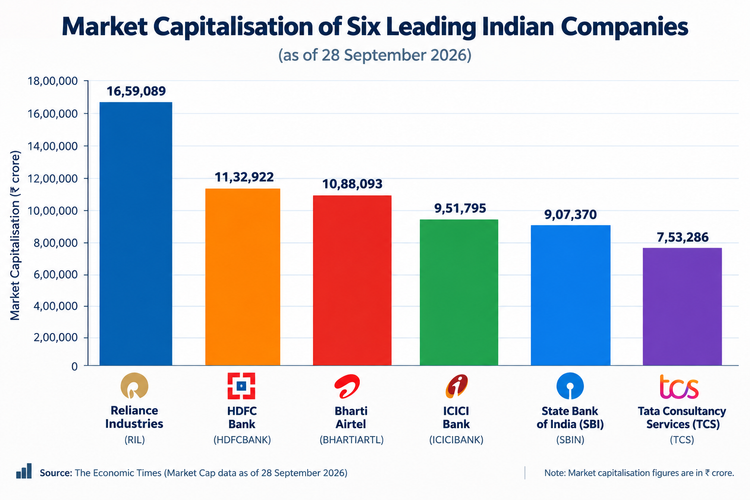
Some companies carry more weight than others. As a result, a sharp fall in one big stock can trigger a bigger Sensex crash across the whole index. Here are a few key names, along with their market capitalisation.
The market cap figures in the table come from your source. They change every day, so please update them before you publish.
| Company | Sector | Market Capitalisation |
| Reliance Industries | Oil | ₹16,59,089 Cr |
| Larsen & Toubro | Infrastructure | ₹5,33,710 Cr |
| Hindustan Unilever | FMCG | ₹4,55,821 Cr |
| Mahindra & Mahindra | Auto Manufacturers | ₹3,76,957 Cr |
| ITC | Food & Beverages | ₹3,37,071 Cr |
| Asian Paints | Paints | ₹2,34,524 Cr |
Note: Market caps change every day. Please check the latest figures before you publish.
Why Did the Sensex Crash? 5 Main Reasons
Let us now examine the actual causes behind this Sensex crash, each related to the other in creating strong selling pressure.
1. Rising US Bond Yields
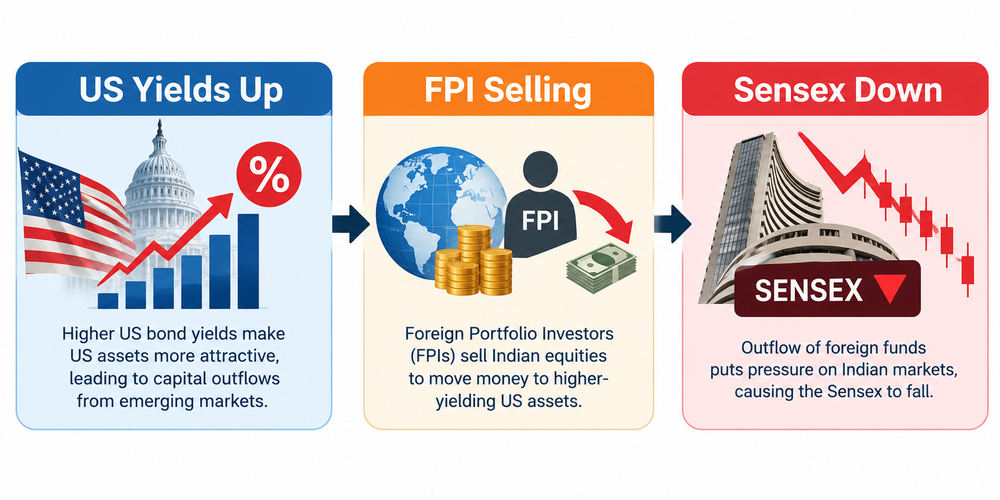
The US 10-year Treasury yield recently moved between 5.2% and 5.5%. That is a high level. Because of this, foreign investors can earn safe returns in the United States.
So why would they take extra risk in India? Many of them do not. As a result, money flows out of emerging markets like ours.
2. Crude Oil Price Jump
Brent crude is now trading somewhere between $107 and $120 a barrel. That hurts India, because we buy most of our oil from other countries. When crude gets costlier, the country pays a bigger bill.
That bigger bill also puts pressure on the rupee. And once the rupee slips, everything we import costs a little more.
3. Tension in West Asia
Tension in West Asia, involving Iran, Israel and the US, is making traders nervous. The main worry is the Strait of Hormuz. A large share of the world’s oil passes through this narrow route.
If supply gets disturbed, oil prices can go higher. That said, markets often react to fear well before any real damage happens.
4. FPI Selling
Foreign Portfolio Investors (FPIs) keep selling Indian shares. As a result, domestic stocks face steady downward pressure. When foreign buyers step back, even good stocks can slip.
5. Inflation and Weaker Earnings
High oil prices push up prices across the economy. Families then have less money left to invest. Meanwhile, companies pay more for transport and raw material.
Higher costs can cut profits. In turn, investor confidence takes a hit.
For rate and inflation updates, follow “Reserve Bank of India official website”
How Traders Read a Falling Market
Traders use a few simple levels to judge the mood. Beginners can learn them quickly. Still, these are guides, not guarantees.
| Term | Meaning |
| Pivot Point | The base price level for the day’s trend |
| Support | A level where buying demand often stops a fall |
| Resistance | A level where selling often stops a rise |
| Bullish Signal | Price stays above the pivot and crosses R1, R2, R3 |
| Bearish Signal | Price drops below the pivot and breaks S1, S2, S3 |
In a bearish market like a Sensex crash, support levels keep breaking. In a bullish market, the price keeps breaking out above resistance. A range-bound market simply stays flat.
Besides the India VIX, which shows market nervousness, sector indices like Nifty Bank, Nifty IT and Nifty Pharma show which areas are hurting most.
For example, our earlier post “Infosys Share Crash: 7 Facts You Need to Know” shows how one IT giant felt this pressure.
What Should Investors Do During a Sensex Crash?
First, do not panic. Sharp falls feel scary, but markets have recovered from every past Sensex crash. Still, every investor’s situation is different.
Here are some sensible habits:
- Check your goals and time frame before you sell anything.
- Continue your SIPs if your plan is long term.
- Avoid borrowing money to buy the dip.
- Keep some cash ready for emergencies.
- Use a stock screener to check PE ratio and RSI before buying.
- Track brokerage charges and margin needs with a calculator.
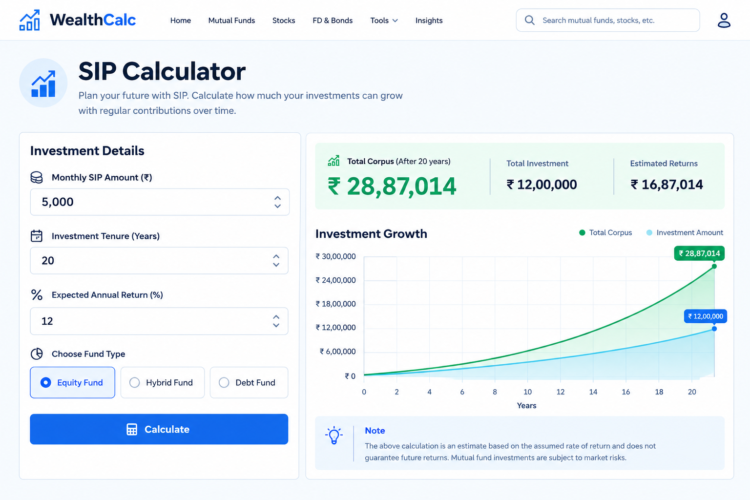
MaharashtraViews Opinion on the Share Market
Our take is straightforward. The equity market rewards patience over panic. A massive decline such as this one appears gloomy in the immediate term. But then again, such a move also helps you evaluate how well you have planned things.
Our conviction is that global forces would continue to drive the market and trigger the next Sensex crash going ahead. Crude oil prices, US yields, and FPI flows are beyond the control of Indian markets. Thus, individual investors need to stick to priorities that lie in their control. These include setting proper goals, disciplined investing, and risk assessment.
In addition, please refrain from getting any investment advice from anonymous social media accounts. Instead, try learning the basics first, as a calm mind usually takes better calls than an agitated one.
Disclaimer
This is an educational blog about topics like the Sensex crash. This is not financial advice. MaharashtraViews is not a SEBI-registered financial advisor. Stock prices, indexes, and market capitalizations can fluctuate rapidly. Verify all figures from official sources. Consult an expert before investing. You are solely responsible for your investment choices. For regulations and safety guidelines, refer to “SEBI investor education page”
Final Thoughts
The Sensex crash came from several reasons together. US interest rates went up, oil prices turned costly, tension stayed high in West Asia, and FPIs kept selling.
Yet the market has always moved in cycles. Understanding the reasons helps you stay calm. In the end, a clear plan protects you better than any prediction.


You May Also Like

UPI New Rules 2026: What Small Business Owners Need to Know

Infosys Share Crash: 7 Facts You Need to Know