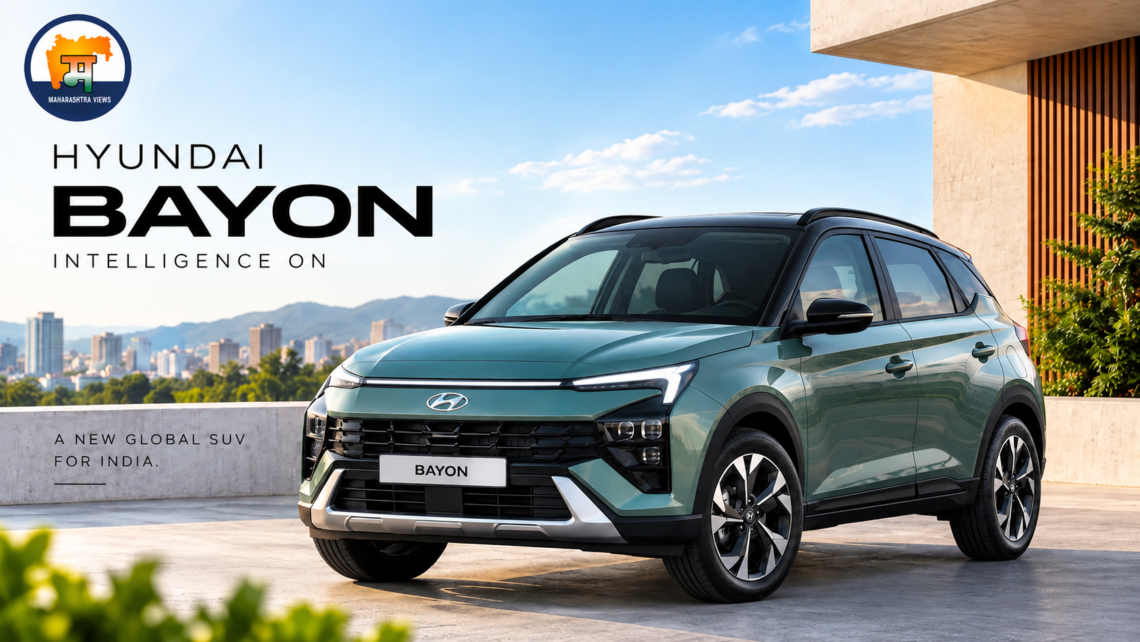
Hyundai Bayon: Powerful Reasons to Wait for This SUV
Hyundai Bayon: A New Crossover Is About to Shake Up the Segment
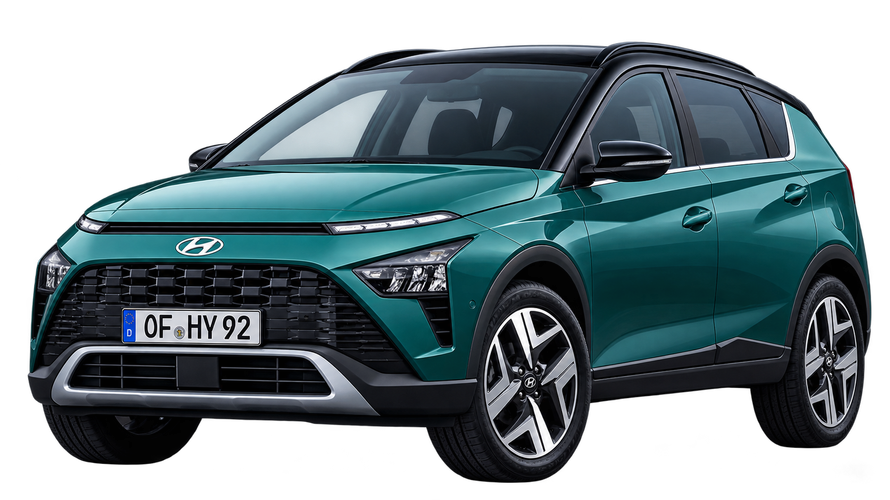
Hyundai just announced a new SUV, and it fills a gap nobody was talking about. The Hyundai Bayon sits right between the Venue and the Creta. That gap has stayed empty for years.
If you want more information on cars like this, do visit MaharashtraViews.com.
What Is the Hyundai Bayon?
Hyundai has a fancy name for the Bayon. In fact, they call it an Intelligent Utility Vehicle, or IUV for short. Sounds complicated, but it really isn’t.
Think of it as a car built to fill a gap. In India, that gap sits between the Venue and the Creta. Meanwhile, go global, and the same car fits between the i20 hatchback and the Kona crossover. One design, two jobs. Therefore, that’s smart planning on Hyundai’s part.
Even the name has a backstory. Bayon takes its name from Bayonne, a city tucked away in France’s Basque region. Hyundai says the place stands for exploration and standing out from the crowd. Most buyers probably won’t think about any of that. Still, the badge looks sharp enough to work on Indian roads either way.
Hyundai Bayon Design: What Stands Out First
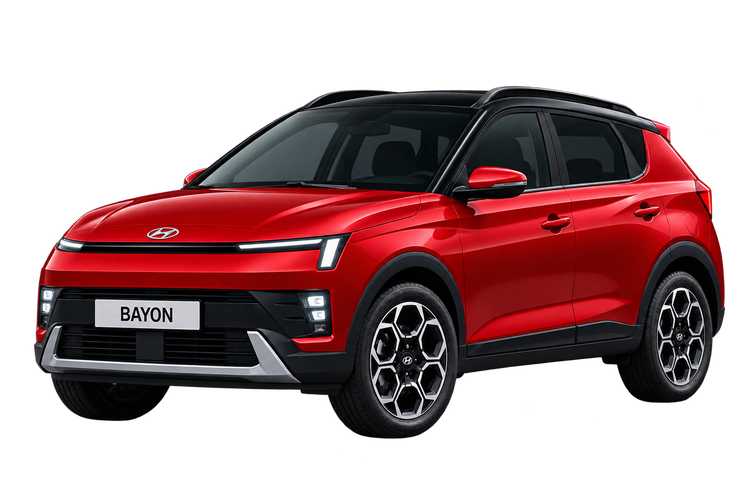
The front is where the Bayon grabs attention. It uses split multipod LED headlights. Above them, a light bar called the H-Edge runs across the hood.
For instance, this design comes from Hyundai’s “Art of Steel” language. For instance, you can see it in the sharp lines on the hood and the bold fender shapes. The car looks wider than it actually is, thanks to this styling.
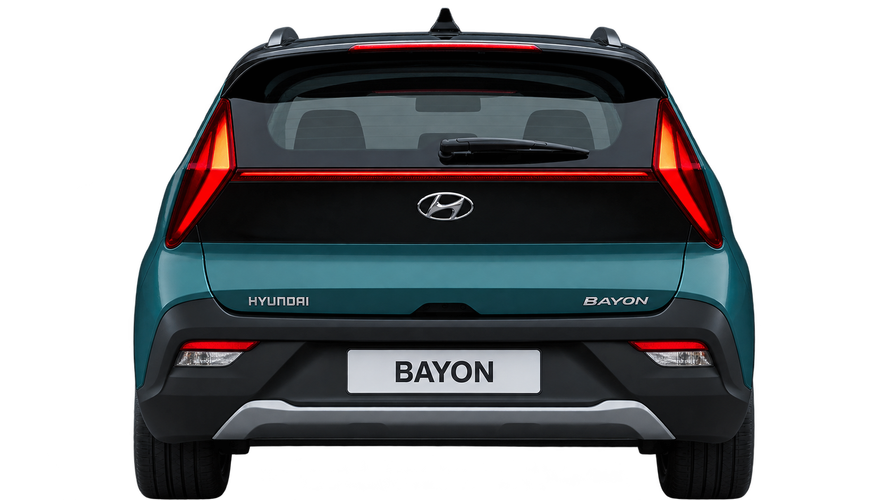
At the back, the Hyundai Bayon’s tail lamps run full width and stay connected by a light strip. In addition, a black boot panel breaks up the body colour. Finally, a shark-fin antenna and a silver skid plate round off the rear look.
- Split LED headlights with H-Edge light bar
- Roof rails and body cladding
- 16-inch or 17-inch alloy wheel options
- Full-width connected LED tail lamps
- Black contrast boot panel
For reference, you can check Hyundai’s own design philosophy on the Hyundai Global official website.
Hyundai Bayon Dimensions and Space
Size matters in this segment, especially for families. The Bayon does not disappoint on paper. It offers a longer wheelbase than the Venue, which should help rear-seat space.
| Specification | Measurement |
| Length | 4,180 mm |
| Width | 1,775 mm |
| Height | 1,500 mm |
| Wheelbase | 2,580 mm |
| Ground Clearance | 183 mm |
| Boot Space | 411 Litres |
That boot space number stands out. At 411 litres, it beats most rivals in this bracket. Therefore, weekend trips and airport runs should feel less cramped.
Hyundai Bayon Engine and Performance
This is where things get interesting for Indian buyers. The India-spec Bayon gets a 1.5-litre naturally aspirated petrol engine. It makes 114 bhp and 144 Nm of torque.
Those numbers sound reasonable, but the real story is the transmission choice. You get a 6-speed manual or a CVT automatic. Neither is class-leading, but both should suit daily driving.
More importantly, the Bayon becomes Hyundai’s first car over 4 metres to get a factory-fitted CNG option. That single feature could pull in a lot of budget-conscious buyers. Running costs matter more than horsepower for many Indian families.
International Bayon buyers get a different setup. They receive a 1.0-litre turbo petrol engine instead. Hyundai claims close to 50 MPG efficiency on this version.
- 0-60 mph in roughly 11.8 to 13.2 seconds internationally
- Eco, Normal, and Sport drive modes
- Sport mode changes the digital cluster to racing-style graphics
Note: Indian units will not get the global turbo engine. So, treat the international performance figures as reference only, not a preview of the India-spec car.
Cabin Technology That Actually Feels Modern
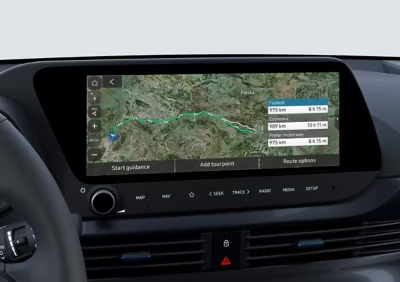
Step inside, and the Bayon tries hard to feel premium. A curved dual-screen setup dominates the dashboard. Both the instrument cluster and infotainment screen measure 12.3 inches on higher trims.
Base variants get smaller 10.25-inch units instead. That is a common Hyundai strategy, so it should not surprise anyone.
The standout feature here is HyGenie, Hyundai’s built-in AI voice assistant. It is meant to make voice commands feel more natural than older systems. Meanwhile, an 8-speaker Bose audio system handles sound duties.
Other comfort features include:
- Wireless Apple CarPlay and Android Auto
- Wireless phone charging
- Hyundai Bluelink connected car services
- Electronic panoramic sunroof
- Dual-zone climate control
- Heated seats and heated steering wheel
- Paddle shifters
Rear doors open at nearly 85 degrees. As a result, loading a child seat or helping elderly passengers becomes much easier. ISOFIX mounts also come built in.
Safety Features on the Hyundai Bayon
Safety often decides the final purchase in this segment. Hyundai has loaded the Bayon with a strong list of standard and optional features.
| Safety Feature | Details |
| Airbags | 6 SRS airbags |
| Braking | ABS with EBD, all-wheel disc brakes |
| Stability | Electronic Stability Control, Hill Hold Assist |
| ADAS | Autonomous Emergency Braking, Adaptive Cruise Control |
| ADAS | Lane Keeping Assist, Blind Spot Monitoring |
| Parking | 360-degree camera, reversing camera |
The Level 2 ADAS suite deserves special mention. Features like lane keeping and adaptive cruise control are rare in this price bracket. So, the Bayon could push rivals to add similar tech faster than planned.
Expected Price and Launch Timeline
Bookings for the Bayon opened on September 23, 2026. Hyundai plans an official launch in India around October 15, 2026. In fact, that timing lines up neatly with the Diwali festive season.
Meanwhile, the expected price ranges from ₹8 lakh to ₹14 lakh. Early estimates suggest the manual variant could start near ₹10 lakh. However, the automatic CVT version may cost closer to ₹12.50 lakh, ex-showroom.
Hyundai Bayon vs Rivals: Price Comparison
Numbers help most when the budget is tight. Here is how the Bayon’s expected price sits next to current rivals in the market.
| Car | Ex-Showroom Price Range |
| Hyundai Bayon (Expected) | ₹8 lakh – ₹14 lakh |
| Tata Nexon | ₹7.37 lakh – ₹14.32 lakh |
| Hyundai Venue | ₹8.00 lakh – ₹15.69 lakh |
| Maruti Suzuki Brezza | ₹7.40 lakh – ₹13.70 lakh |
| Maruti Suzuki Fronx | ₹6.85 lakh – ₹11.98 lakh |
| Toyota Urban Cruiser Hyryder | ₹10.99 lakh – ₹20.19 lakh |
| Honda Elevate | Starts around ₹11 lakh |
Look at the table, and one thing jumps out right away. The Bayon’s price sits almost bang in the middle of where the Nexon and Venue already are. So really, these two are the ones it’ll be fighting hardest.
The Hyryder plays a different game altogether. It sits a notch higher, price-wise. So think of it less as a rival and more as the car you’d look at if your budget stretches a bit further.
A few names we couldn’t pin down prices for: Skoda Kushaq, Volkswagen Taigun, Maruti Grand Vitara, Maruti Victoris, and Nissan Tekton. The best bet is checking each brand’s website directly before you compare.
Who Will the Hyundai Bayon Compete Against?
This segment is crowded, and competition will not be easy. The Bayon enters a space already fought over by several strong names.
- Maruti Suzuki Brezza
- Maruti Suzuki Grand Vitara
- Maruti Suzuki Victoris
- Maruti Suzuki Fronx
- Toyota Urban Cruiser Hyryder
- Honda Elevate
- Skoda Kushaq
- Volkswagen Taigun
- Tata Nexon
- Tata Sierra
Against this list, the Bayon needs a clear identity. Therefore, the factory CNG option and the Venue-Creta positioning could be its biggest advantages. For a full comparison of segment rivals, check our earlier post “Tata Nexon vs Maruti Brezza: Which SUV Wins”
MaharashtraViews Opinion on the Hyundai Bayon
Here’s what we think, plain and simple. Hyundai has played this smart. The Bayon fills a gap that’s been sitting empty between the Venue and Creta for years.
The CNG option is the real winner here, not the AI assistant everyone’s talking about. After all, Indian buyers care about one thing above everything else — how much fuel costs them every month. Get that right, and you sell cars. Even so, the touchscreen size won’t matter half as much.
Now, about the price. We’re a little worried. If Hyundai puts the Bayon too close to the Creta, most people will just save a bit extra and buy the Creta. Simple as that. The Bayon has to feel different, not just a smaller Creta with less stuff.
Not sure which SUV fits your budget yet? Check our earlier guide “Best Compact SUVs Under 12 Lakh in India”; it should help.
Disclaimer
This article is based on early information and expected details shared by Hyundai. Prices, specifications, and launch dates can change before the official announcement. Please verify all final figures on the “Hyundai India official website” before making any buying decision. MaharashtraViews does not guarantee the accuracy of unreleased pricing or specifications.
Final Thoughts
The Hyundai Bayon is not trying to be flashy. Instead, it is trying to be useful. A longer wheelbase, a bigger boot and a factory CNG option all point toward one goal. Hyundai wants a car that solves everyday problems for Indian families, not just one that looks good in a showroom.
Whether that plan works will depend entirely on the price tag Hyundai finally reveals.

You May Also Like
Tata Curvv Series X: Fewer Variants, More Value?

Is The New Yezdi Scrambler Worth It? Honest Price & Mileage