Yamunotri Dham: Everything You Need to Know Before You Go
Yamunotri Dham: The Complete Guide to Goddess Yamuna’s Sacred Home
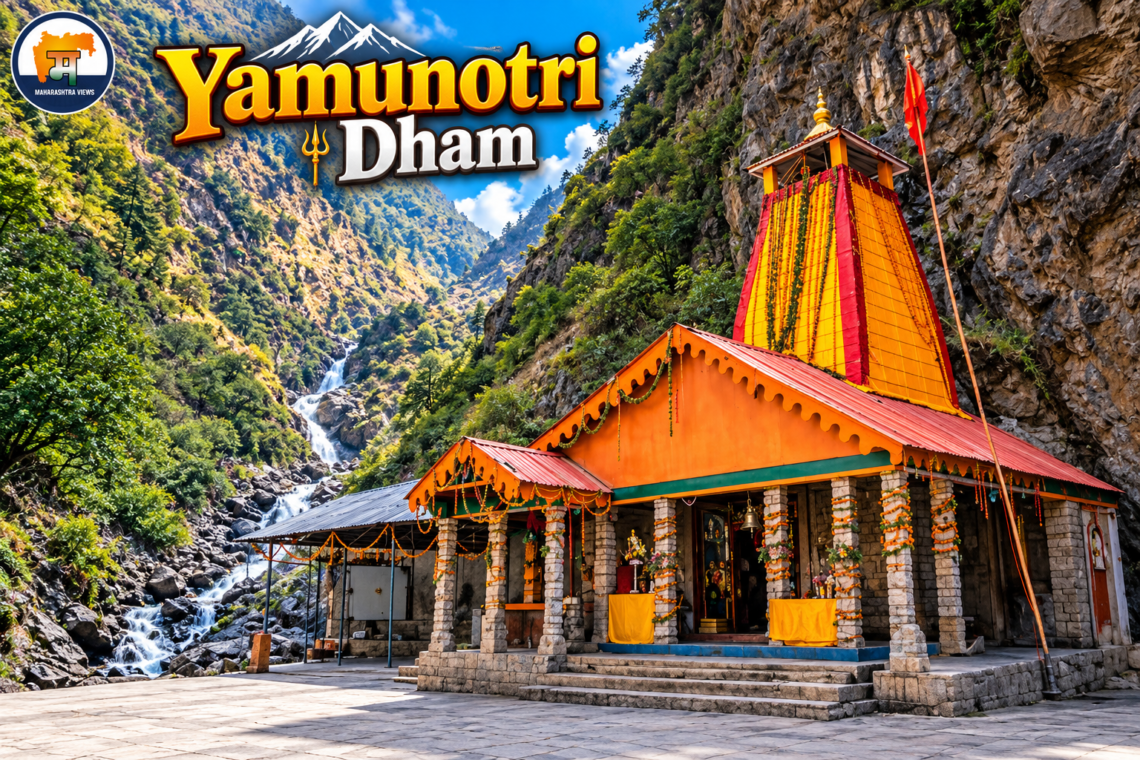
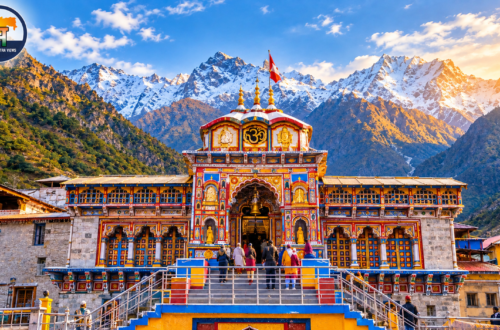
Boiling water, rice that cooks in minutes, and a river born from a glacier, all within a few steps. 🌊 That is what makes Yamunotri Dham so special. Besides this, the small shrine in Uttarkashi district sits at around 3,235 metres and begins the Chota Char Dham Yatra. 🏔️
Yamunotri Dham is the source of the Yamuna River and the home of Goddess Yamuna. However, the trip needs some planning. So, this guide covers the legend, the temple, the trek, the costs, and the best time to go. 🙏
If you enjoy travel and tourism blogs like this, visit maharashtraviews.com for more. ✨ For now, let us see why Yamunotri Dham comes first on the yatra.
🛕 Why Yamunotri Dham Opens the Char Dham Yatra
Pilgrims visit Yamunotri first, then Gangotri, Kedarnath, and Badrinath. This order follows a clockwise path called dakshinavarta. As a result, the route matches the Hindu practice of parikrama.
Yamunotri Dham sits on a flank of the Bandarpunch range in the Garhwal Himalayas. Because of this, it is the westernmost shrine of the circuit. Gangotri comes next, so read our guide on Gangotri Dham: Complete Guide to the Holy Source of Ganga before you plan the full route. 🚩
| 📌 Quick Facts | Details |
| Location | Uttarkashi district, Uttarakhand |
| Temple altitude | About 3,235 m (some sources say up to 3,293 m) |
| Opens | Akshaya Tritiya (around May) |
| Closes | Around Diwali (October/November) |
| Trek from Janki Chatti | About 6 km |
| Winter seat | Kharsali village |
🌞 The Story of Goddess Yamuna and Yamraj
Goddess Yamuna is the daughter of Surya Dev, the Sun God. Yamraj, the God of Death, and Shani Dev are her brothers. In short, she comes from a very powerful family.
According to the legend, Yamuna did tapasya to free Yamraj from a shadow curse. Yamraj felt moved by her devotion. In return, he gave her a boon. Anyone who bathes in her waters and prays at her shrine stays safe from untimely death. 🙏
Old texts like the Rigveda, Kurma Purana, Kedar Khand, and Brahmanda Purana mention her too. They also call the river Kalindi. 📜 Interestingly, the yatra order links to the Pandavas and their final journey. You can read more about that side of the story in Kedarnath Dham: Untold Secrets That Will Amaze You. 📖
🏛️ Yamunotri Dham Temple: History and Architecture
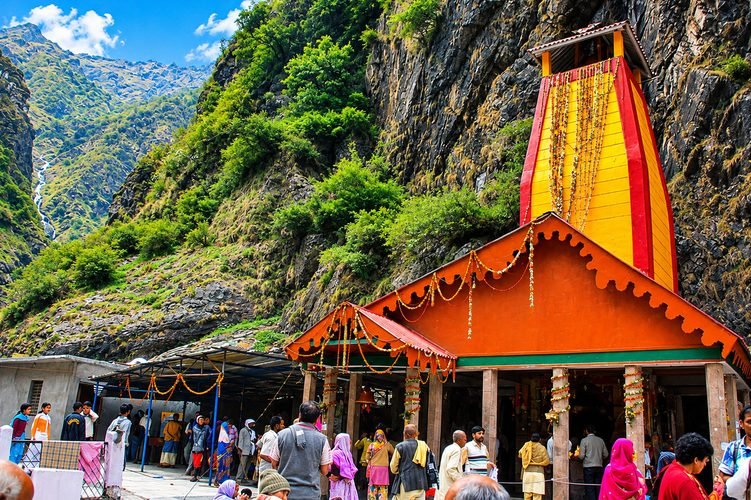
The temple stands on the left bank of the Yamuna River. King Pratap Shah of Tehri Garhwal first built it. However, some records credit Maharaja Sudarshan Shah in 1839. Later, earthquakes damaged the shrine, so Maharani Guleria of Jaipur rebuilt it in the 19th century.
Inside, the main idol of Goddess Yamuna is carved from black marble. Goddess Ganga stands on her right, and her winter idol stands on the left. Next to the main temple, a separate shrine honours Surya Dev. ☀️
Remember one rule. Photography and videography are strictly banned inside the temple. 📵
♨️ Surya Kund, Divya Shila and Gauri Kund: The Sacred Hot Springs
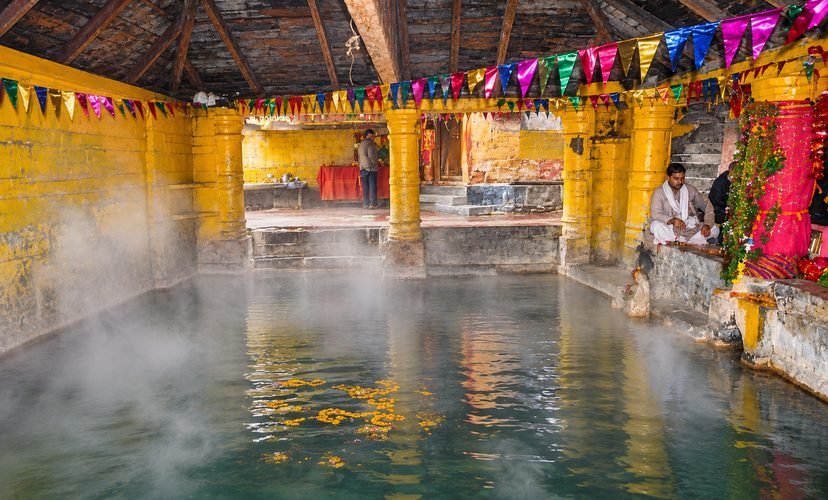
Underground heat feeds natural hot springs at Yamunotri Dham. Pilgrims treat them as part of the darshan. Here is what you will see:
- Surya Kund 🔥: A boiling spring near the temple. Devotees tie raw rice and potatoes in a muslin cloth (potali) and dip it in. The food cooks within minutes. Afterwards, pilgrims take it home as prasada.
- Divya Shila 🪨: A sacred rock pillar next to Surya Kund. Devotees worship it before entering the temple.
- Gauri Kund (Tapt Kund) 🛁: A pool below the temple that collects warm water from Surya Kund. Pilgrims bathe here before darshan. A small Hanuman shrine stands beside it.
🧊 Champasar Glacier and Saptarishi Kund
The temple is not the real source of the river. In fact, the Yamuna begins higher up at the Champasar (Yamunotri) Glacier near the Bandarpunch peaks, at about 6,387 metres. 😮
Further up, glacial lakes on Kalind Mountain form Saptarishi Kund, at about 4,421 metres. The name comes from the Saptarishi constellation, which appears above the lakes at night. ⭐ Seven streams, called Sapta Dhara, feed the river from here. Devotees believe that seeing or worshipping these streams removes sins and the fear of death. 🙏
However, this trek is tough. It covers about 7 km beyond the temple and needs a local guide. So, only fit trekkers should try it, and most pilgrims pray at the main temple instead.
After that, the Yamuna flows through Uttarakhand, Himachal Pradesh, Haryana, Delhi and Uttar Pradesh. Finally, it meets the Ganga at the Triveni Sangam in Prayagraj. 🌊

❄️ Yamunotri Dham in Winter: Kharsali Village
Heavy snow buries the shrine every winter. Because of this, the temple stays open for only six months. When the doors close, priests carry the idol down to Kharsali village. 🏘️
People call Kharsali the maayka (maternal home) of Goddess Yamuna, and also Chhoti Yamunotri. The village has her winter shrine and an old Shani Dev temple. Similarly, Badrinath moves its deity in winter, and our guide Badrinath Dham: The Complete Guide You Actually Need explains how. 🙏

🚗 How to Reach
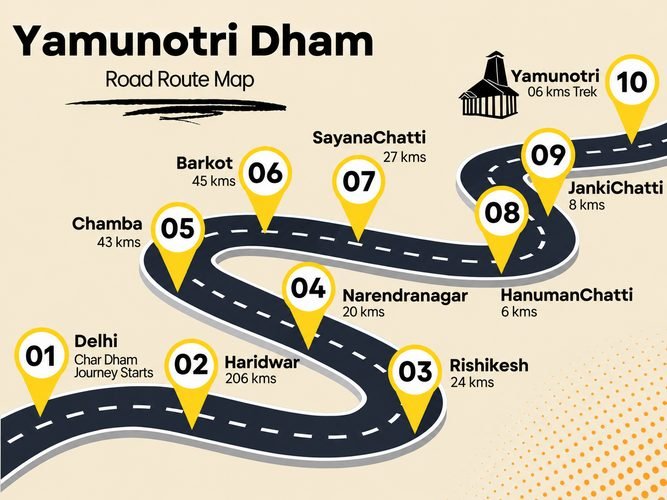
Most pilgrims start from Haridwar, Rishikesh or Dehradun. After that, both common routes meet at Barkot. 🗺️
- Route 1: Rishikesh → Narendra Nagar → Chamba → Tehri → Uttarkashi → Dharasu Band → Barkot → Janki Chatti
- Route 2: Dehradun → Mussoorie → Naugaon → Barkot → Janki Chatti
Barkot is the best overnight stop, since it has more hotels and cottages. In contrast, Janki Chatti has very few stay options. From Barkot, Janki Chatti is 45 km away on narrow mountain roads. 🛣️ For stay and package details, check Uttarakhand Tourism and GMVN.
A bus from Haridwar costs roughly ₹800–₹900 per person. 🎟️ However, fares can change, so confirm before you book. Parking at Janki Chatti is very limited too, so a bus or tempo traveller works better than a private car. 🚌
Typical 3-day plan:
- Day 1: Haridwar to Barkot 🚌
- Day 2: Barkot to Yamunotri darshan and back to Barkot 🛕
- Day 3: Barkot to Haridwar 🏁
Approximate budget: around ₹6,000 per person by bus, and ₹20,000–₹25,000 in total by private car. 💵
🥾 Yamunotri Dham Trek: 6 km Route Guide
The trek starts at Janki Chatti. For the first 1.5 to 2 km, you walk through village markets and an entry archway. On this gate, Goddess Yamuna stands in the centre, with Yamraj on her right and Shani Dev on her left. 🚪 At about 1.5 km, officials scan your registration barcode and issue a darshan token. 📲
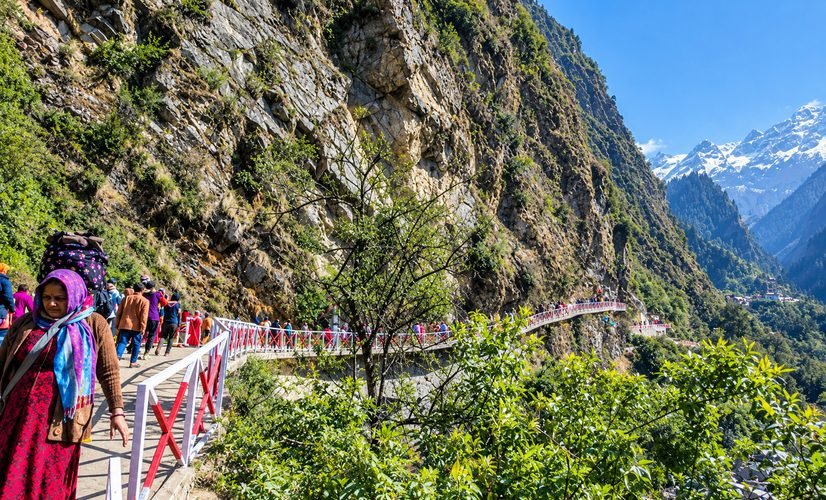
Next, you cross an iron bridge over the Yamuna. After that, a steep climb of about 4 km begins on stone steps. The mule track splits off after 3 km, so the walking path gets less crowded. 😮💨
Along the way, resting sheds give valley views, and you pass waterfalls and a landslide zone. About 1 km before the temple, you reach the Bhairav Temple. Meanwhile, watch your head, because some rocks hang low over the path. ⚠️
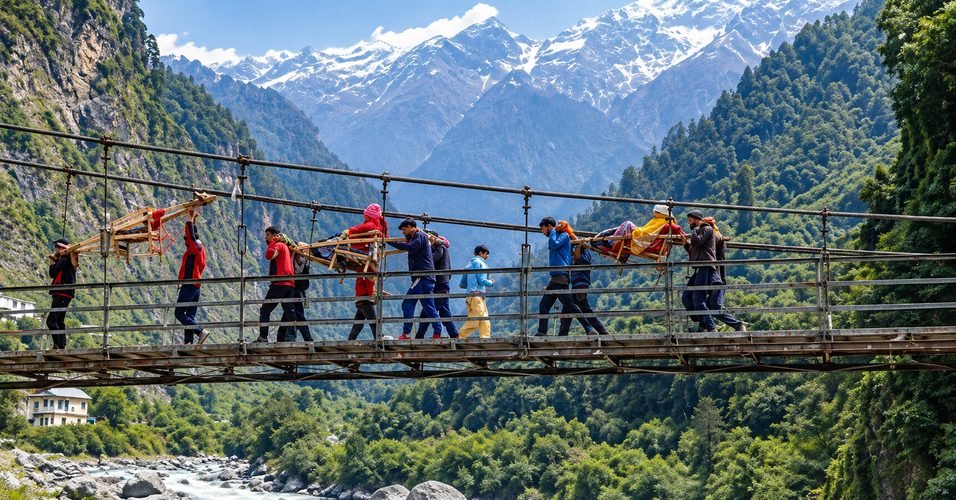
| 🐴 Option | Approx. Round-Trip Cost |
| Mule (khacchar) | ₹2,500–₹3,000 |
| Palanquin (palki) | ₹8,000–₹8,500 |
| Porter (pitthu) | ₹8,000–₹8,500 |
Rates change, and bargaining is common. 💰
🚶 Our Personal Trek Experience
We started from Janki Chatti at around 4:00 AM. 🌌 The air was cold, and the village market was still waking up. Because of the early start, the first 2 km felt calm and easy. 😌
At about 1.5 km, we reached the counter where officials scan the registration barcode. Our token came quickly, since the queue was short. Then we crossed the iron bridge over the Yamuna. 🌉 The river sounded louder here, and the climb began right after.
The next 4 km tested our legs. 😮💨 The stone steps felt endless, but the resting sheds helped a lot. Meanwhile, the valley views gave us a good reason to stop and breathe. ⛰️ We also passed waterfalls and the landslide zone, and we walked that part slowly. ⚠️
Soon after, we noticed the low rocks hanging over the path. One careless step could mean a bump on the head. 🤕 Mules passed us often, so we kept to the side. About 1 km before the temple, the Bhairav Temple appeared, and we knew the end was close. 🛕
Finally, we reached the shrine. The steam from Surya Kund hit first, then the sound of bells. ♨️ We dipped our rice potali, took the holy bath at Gauri Kund and joined the darshan line. 🙏 Honestly, our tired legs felt lighter the moment we stood before the black marble idol. 💙
Our trek takeaways:
- Start by 4:00 AM for a peaceful walk ⏰
- Keep your pace slow on the steep 4 km 🐢
- Wear shoes with strong grip 👟
- Carry cash, because UPI often fails 💵
📅 Best Time to Visit
| Season | Crowd | Weather Risk | Verdict |
| May–June | 🔴🔴🔴 Very high | 🟡 Medium | Long queues, sometimes 3–4 hours |
| July–mid Sept | 🟢 Low | 🔴🔴🔴 Landslides | Avoid |
| Late Sept–mid Oct | 🟡 Moderate | 🟢 Low | ✅ Best time |
During peak season, darshan queues can cross 3–4 hours. As a result, some pilgrims struggle to get darshan at all. ⚠️ So, keep your darshan token safe from the 1.5 km counter onwards.
Late September to mid-October is the sweet spot. The monsoon has passed, and crowds are smaller. However, the temple closes around Diwali, so check dates before you book. 🗓️
🎒 Packing Tips Before You Go
Registration is mandatory. So, register on the official Uttarakhand registration portal before you travel. 📝
- Carry enough cash, since networks are weak and digital payments often fail 💵
- Pack water, ORS or Glucon-D, snacks and a raincoat 🌧️
- Take warm clothes and basic medicines for nausea, altitude and cold 💊
- Keep your backpack light, because the climb is steep 🎒
⭐ MaharashtraViews Review of Yamunotri Dham
Yamunotri Dham is a short yatra, but it is not an easy one. In particular, the steep climb and the weak network need preparation. Even so, the hot springs, the legend and the river source make the effort worth it. 🙏
| 📊 Category | Rating (out of 5) | Why |
| Spiritual value | ⭐⭐⭐⭐⭐ | First stop of Chota Char Dham, with a strong legend |
| Scenery | ⭐⭐⭐⭐⭐ | Himalayan peaks, waterfalls and valley views |
| Trek difficulty | ⭐⭐⭐⭐ | Steep 4 km stone steps after the bridge |
| Facilities | ⭐⭐⭐ | Limited stay and parking, weak network |
| Crowd comfort | ⭐⭐⭐ | Heavy in May–June, calmer in late September |
| Overall | ⭐⭐⭐⭐ (4.2/5) | Worth it with proper planning |
What we liked 👍
- Surya Kund and the rice potali tradition ♨️
- A short 6 km trek with mule and palki options 🐴
- Quiet darshan in late September to mid-October 🌤️
What needs improvement 👎
- Very limited parking at Janki Chatti 🚗
- Few stay options near the base 🏨
- Unreliable mobile network and failing digital payments 📵
Who should go? Families, senior pilgrims (with a mule or palki) and first-time Char Dham travellers will find it suitable. 🙏 However, avoid the monsoon and the opening weeks. So, plan for late September or early October. ✅
🌿 Final Thoughts on Yamunotri Dham
Yamunotri Dham is small, but it stays with you. A boiling spring, a cold river and a steep climb sit side by side. Beyond that, the legend of a sister who saved her brother gives the place its emotional pull. 💙
Note: Prices, timings and opening dates can change. Please confirm with official sources before you travel.

You May Also Like
Gangotri Dham: Complete Guide to the Holy Source of Ganga
Badrinath Dham: The Complete Guide You Actually Need