Is the Price Drop in 2026 Actually True? Find Out Now
Price Drop in 2026: The Other Side of the Story on Falling Smartphone Prices
With all the discussion around phones becoming more expensive this year, the general consensus seems to be right. However, scratch the surface, mitro, and you’ll see the real price drop in 2026 story — some individual phones are becoming less expensive, even within weeks of their release.
The fall in smartphone prices in 2026 is not universal. It is not the general industry-wide trend that consumers are waiting for. Instead, this decrease applies only to certain phones and occurs for specific reasons — not because of Christmas generosity.
So, which phones exactly are becoming less expensive, and why does this apply only to some of them?
1. The Paradox: Falling Prices Inside a Rising Market
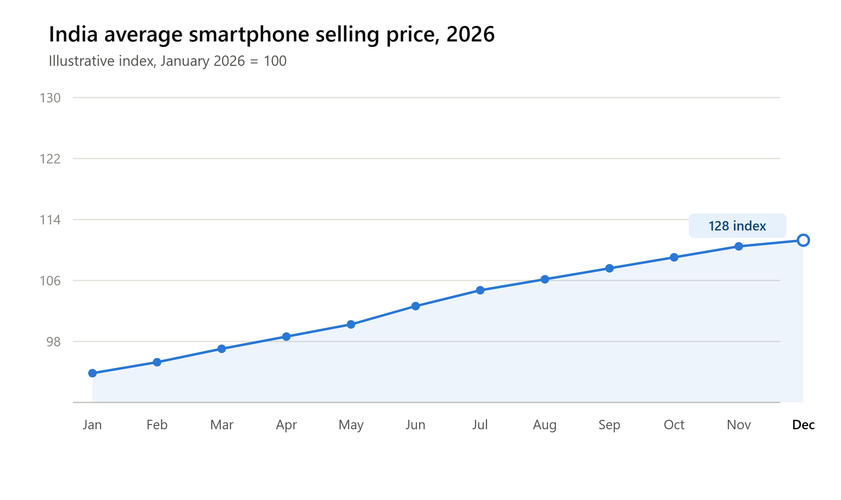
This may seem contradictory at first. Market research companies have reported that the average price of smartphones in India reached an all-time high in 2026 due to the global shortage of memory chips. However, the prices of individual mobile phones were falling during the same period.
Both trends can occur simultaneously, and there is a clear explanation. The overall average price increased because entry-level phones were being phased out of the market—not because the prices of all smartphones rose. According to IDC, shipments of smartphones priced below $100 were cut in half at the beginning of 2026, while shipments in other price categories increased.
Imagine this as a classroom average. Suppose the lowest-performing students stop taking the exam. The average score will improve, even though none of the students’ grades have changed. That is what seems to be happening with smartphone prices in India this year.
| What’s Happening | Why It Happens |
| Average selling price hits a record high | Cheap, under-$100 phones are disappearing from the market |
| Individual flagship and mid-range prices fall | Brands correct launch prices, clear old stock, or run festive sales |
| Both trends show up in the same period | The two are driven by different parts of the market, not the same cause |
Where the Price Drop 2026 Actually Happens
Price drops in 2026 are showing up mainly in three situations:
- A flagship phone did not sell as expected, so the brand corrects the price early
- An older generation model gets discounted once its successor launches
- A festive or seasonal sale event pushes select models down temporarily
None of these reflect a genuine cost reduction. They reflect a brand managing demand, not a drop in the phone’s actual cost to build. Component costs, especially memory, have moved in the opposite direction through most of 2026.
2. Real Examples of the Price Drop in 2026 on Phones
Let’s get specific instead of staying theoretical. A few real cases from 2026 show this pattern clearly.
| Phone | What Happened |
| Samsung Galaxy S26 Ultra | Price cut within two months of its India launch, reportedly after buyers pushed back on the original price |
| Samsung Galaxy S26+ | Received a price cut alongside the Ultra, even as Samsung’s budget A-series went up in price |
| Google Pixel 10 | Price cut of over ₹10,000 on Amazon soon after launch |
| Google Pixel 9a | Effective price cut of up to ₹23,000 during a sale period, through bank offers and exchange deals |
| iPhone 16 | Sold at a steep discount during a Republic Day sale event |
Take note of one thing: nearly all the phones on this list fall into the mid-range or flagship categories. Not a single phone can be classified as a budget smartphone priced below ₹15,000, and this is no coincidence.
Pay attention to how brands offer these discounts. Although some discounts, such as the Pixel 9a’s price cut, simply reduce the phone’s sticker price, brands often bundle other discounts with bank offers, exchange bonuses, cashback deals, and seasonal sales. The listed price may remain unchanged, but buying the phone at the right time can help you pay much less than the advertised price.
Key takeaways from these examples:
- Every phone that got cheaper this year sits in the mid-range or flagship segment
- Some cuts are a direct sticker-price change, like the Pixel 10 and the Galaxy S26 series
- Other cuts are effective discounts, built from bank offers and exchange bonuses, like the Pixel 9a
- Festive sale discounts, like the iPhone 16’s Republic Day price, tend to be short-lived
3. Why Budget Phones Are the Exception
Here is the connection between the two stories: prices are rising in some segments and falling in others. The memory-chip shortage affects budget phones the most because memory chips account for 40% or more of a phone’s assembly cost. Consequently, manufacturers have virtually no room to discount budget phones, which already generate very low margins.
High-end and mid-range smartphones work differently. Their higher margins give manufacturers more flexibility to adjust prices when the initial price fails to attract customers. Samsung’s Galaxy S26 series provides a good example. Samsung launched the phones at a high price, but weak sales forced the company to reduce them to a level buyers were willing to pay.
On the other hand, brands must ensure that their overall revenue remains protected. This is precisely why several manufacturers have increased the prices of their budget models while reducing the prices of their flagship phones. One segment will quietly absorb the increased cost of memory chips, while the other will benefit from a much-needed, headline-grabbing price reduction. Simply put, it is highly unlikely that this kind of price cut would apply to a budget smartphone in 2026.
| Factor | Budget Phones | Flagship / Mid-Range Phones |
| Share of memory in build cost | 40 percent or more | Comparatively smaller share |
| Room to absorb a price correction | Very little; margins are thin | More room, margins are thicker |
| Price direction in 2026 | Moving upward | Corrections and discounts seen |
| Likely trend from now on | Unlikely to soften soon | Early corrections after launch remain common |
4. Is This a Real Discount or a Marketing Reset
Here is the honest part most articles skip. A price cut two months after launch usually means the original price was set too high, not that the phone suddenly became cheaper to make. Component costs, especially memory, have not gone down during this period. If anything, they have kept climbing through most of 2026.
So when a flagship price drops, it is a correction to what the market will actually pay, not a reward passed down from lower manufacturing costs. That distinction matters if you are deciding whether to trust a similar drop on your next favourite phone. A brand rarely admits a launch price was wrong. Instead, the correction gets dressed up as a “special offer” or a “limited period price,” even when it quietly becomes the new normal.
Signs that a price cut is a correction, not a genuine cost saving:
- Component costs, especially memory, have not come down during the same period
- The cut arrives soon after launch, once weak sales become clear
- The brand frames it as a “special offer” rather than admitting the launch price was too high
- The lower price tends to stick around, instead of reverting once the “offer” ends
IDC India Smartphone Market Tracker
A Quick Reality Check Table
| Signal | What It Usually Means |
| Price cut within 2–3 months of launch | Original price was likely too aggressive |
| Price cut right before a successor launches | Brand is clearing old stock, not offering a “deal” |
| Price cut during a festive sale only | Temporary, and price often returns after the sale |
| Price cut across a brand’s entire budget line | Rare in 2026, and worth watching closely if it happens |
5. How to Actually Use This Information
If you have been waiting for prices to fall before buying, this is where it gets useful. Waiting blindly across the board will not work in 2026. Waiting selectively, on the right kind of phone, still can.
- Track flagship and premium phones a few weeks after launch, since early corrections are common this year
- Watch for the successor announcement of a phone you like, since the outgoing model often gets discounted fast
- Avoid assuming a budget phone will get cheaper with time, since that segment is under the opposite pressure
- Treat festive sale prices as temporary, not as the new normal price
- Compare the effective price, not just the listed price, since bank offers and exchange bonuses often carry the real discount
Different buyers should read this differently. If you are eyeing a flagship, patience usually pays off, since these are the models most likely to see a correction. If you are looking at a budget phone, buying sooner rather than later makes more sense, because prices there are unlikely to soften anytime soon.
| Buyer Type | Best Approach in 2026 |
| Flagship buyer | Wait a few weeks to months after launch for a possible correction |
| Budget phone buyer | Buy sooner, since prices in this segment are unlikely to fall |
| Buyer eyeing an outgoing model | Watch for the successor’s announcement; discounts often follow fast |
| Festive sale shopper | Treat the price as temporary, not the phone’s new standard price |
Maharashtra Views AI Tech Expert
The smartphone price drop story in 2026 is real, but it is not the story most buyers assume it to be. It is not the memory chip crisis easing up. It is brands correcting flagship prices that launched too high, clearing out older stock, and running short festive discounts on select models.
If you are hunting for genuine savings this year, look at premium and mid-range phones a couple of months after launch, not at the budget segment. That part of the market is still moving upward, and there is no sign of that changing before 2027.
The smart move is not to wait for prices to fall everywhere. It is to know exactly where they might fall and buy there.


You May Also Like

AI Revolution or Bubble? Find Out the Truth
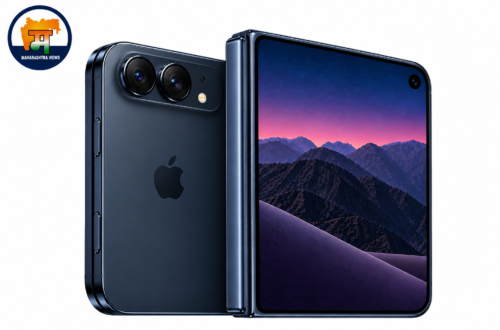
Is the iPhone Duo Worth It? Apple’s First Foldable, Reviewed